Loading...
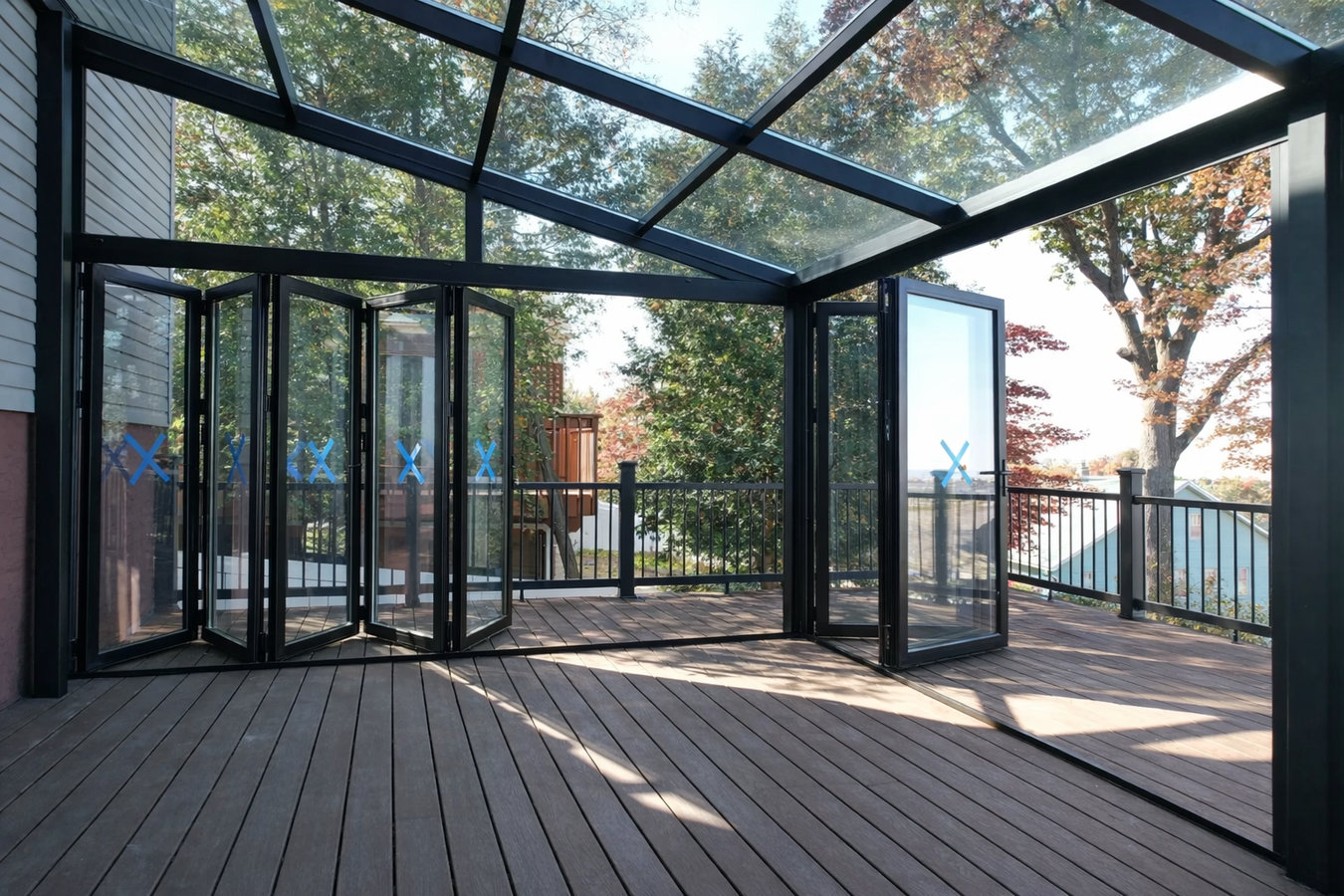
A screened lanai goes dark by September. A solarium gives you glass walls, a glass roof, and a room that works in July heat and January cool - built to Florida's coastal standards with every permit handled for you.
Solarium installation in Palm Coast means building a fully enclosed room with glass walls and a glass or transparent roof - designed to bring in maximum natural light while keeping the heat, bugs, and rain out. Most projects take eight to fourteen weeks from permit approval to final walkthrough, with the glass selection and cooling plan being the two decisions that matter most for year-round comfort in Florida.
Unlike a standard sunroom that uses insulated walls with large windows, a solarium uses glass or transparent panels for most of its walls and ceiling. That means dramatically more light - but it also means the contractor must design carefully for heat management. In Palm Coast, where summer temperatures regularly reach the low 90s, the glazing system is the single biggest factor in whether your room feels like a comfortable retreat or an unusable greenhouse. Homeowners looking for a more conventional walled addition may also want to review our page on custom sunrooms as an alternative if a fully glass structure is more than you need.
The sections below cover what signs suggest a solarium is the right addition for your home, how we approach the design and construction process, and what questions to ask any contractor you are considering.
If you love the idea of coffee on your patio but Palm Coast's heat and no-see-ums make it miserable before 9 a.m., a solarium changes how you start your day. You get the outdoor light and the garden view without stepping into a wall of humidity or needing bug spray at sunrise. The glass walls let the morning in while keeping the outdoors at a comfortable distance.
Many Palm Coast homes have screened enclosures that work well from October through April but become sweltering or rain-soaked the rest of the year. If your screened space sits empty from May through September, converting it - or replacing it with a fully enclosed solarium - extends that usable window to twelve months. A well-designed solarium with the right glass and a cooling plan is comfortable even in July.
If a corner of your house never gets natural light or just sits empty most of the time, a solarium addition can transform how that whole section of the home feels. Natural light has a real effect on how spacious and connected a space feels - and in Palm Coast, with around 233 sunny days a year, there is no reason to leave that resource untapped.
In Palm Coast's competitive real estate market, bright and light-filled spaces consistently attract buyers. A permitted, professionally built solarium adds real appraised square footage - not just cosmetic appeal. The key word is permitted: an unpermitted addition can complicate a sale in Flagler County and may need to be disclosed, removed, or brought up to code at your expense before closing.
We build solariums in a range of configurations - from lean-to designs attached to an existing exterior wall to freestanding garden rooms with independent rooflines. Every build starts with a site visit to assess the existing slab or foundation, check drainage, and understand how the room will connect to your home. For homeowners who want overhead shade without a fully enclosed glass room, our page on patio cover installation covers a simpler covered structure that shares some design considerations with solariums but costs significantly less and installs faster.
Glass selection is the central decision in every solarium project. We specify low-emissivity glass as standard - the kind with a nearly invisible coating that reflects heat while still letting light pass through. In a Palm Coast summer, that coating is the difference between a room you use every day and one you avoid until October. Impact-resistant glass is also standard, because Florida's building code requires it for coastal construction and because a storm-rated glass system is the right call for a home on the Atlantic coast.
Built against an existing exterior wall with a sloped glass roof - the most common configuration for Palm Coast homes with a rear patio footprint already in place.
A four-sided glass roof structure for homeowners who want the full sunroom aesthetic with natural light from multiple directions.
Frames glass walls and a roof system onto an existing concrete slab - a cost-effective path when the slab is structurally sound and drainage is already correct.
Includes foundation work before the glass structure goes up - the right approach when the existing slab is damaged, improperly sloped, or the project area has no existing concrete.
Palm Coast sits in Flagler County, which falls under Florida's statewide coastal wind-load requirements. Any solarium built here must use impact-resistant glass and a reinforced frame - not because a contractor is upselling you, but because the building code requires it and because the Atlantic coast gets real storms. That requirement adds cost compared to national quotes you might see online, but it also means your room is built to handle the kind of weather that shows up here. The U.S. Department of Energy has useful guidance on window glazing and energy performance that is worth reading before you compare glass specifications from different contractors.
Palm Coast was also developed on flat, low-lying terrain originally shaped by a canal and drainage network, and much of it sits on sandy soil with lower load-bearing capacity than clay-based lots. A solarium foundation needs to be engineered with that in mind - a contractor who has built in Flagler County before will already account for it. HOA requirements are another local factor worth knowing: much of Palm Coast was built as a planned community, and many neighborhoods require architectural review and written approval before any exterior addition can begin. Homeowners in Flagler Beach and throughout Bunnell have their own local rules to check before construction starts - we help with that process as part of every project.
We visit your home, look at the space, and take measurements - no charge and no obligation. Come with a rough idea of how you want to use the room and any HOA documents that mention exterior additions. We reply within one business day to confirm your visit.
After the visit, you receive a written quote that breaks out the glass specification, structural work, permits, and interior finishes separately. This is also the stage where we review your HOA requirements and prepare the architectural review submission if your neighborhood requires one - getting that approval in writing before any work begins protects both of us.
Once you sign, we file the permit with Flagler County - typically a one-to-three-week review process. Foundation and framing work follows: expect some noise and equipment in your yard for three to seven days, but your interior living space stays untouched throughout this phase.
Glass panels and the roof system go in after the frame passes its inspection. Interior finishing - flooring, electrical, trim - follows. A final Flagler County inspection confirms everything meets code. We walk through the finished room with you before you make your last payment.
Free estimate, no obligation. We handle permits, HOA submissions, and the full build - you just have to make the call.
(386) 529-0493Every solarium we build uses impact-resistant glass that meets Florida's coastal construction requirements - not as an upgrade, but as a baseline. The National Sunroom Association outlines why glazing standards matter in high-wind coastal areas. Building to that standard is what separates a room that holds up in a named storm from one that becomes a problem.
We file every permit with Flagler County, schedule inspections, and manage all paperwork from application to final sign-off. You never need to visit a government office or track down a plans examiner. A permitted, inspected solarium is also your protection at resale - it shows up as legal square footage, not a liability.
A large portion of Palm Coast's neighborhoods require written HOA approval before exterior additions can begin. We review your association's requirements, prepare the architectural drawings, and submit on your behalf before we schedule any construction. Getting approval in writing first avoids the expensive scenario of modifying or removing work after the fact.
Palm Coast's sandy, low-bearing soil requires a foundation designed for local conditions - not a generic slab spec copied from an inland job. We assess drainage at the site visit and engineer the foundation accordingly, because water that pools against a solarium base is the most common cause of long-term problems in this area.
Every one of these points connects to the same underlying fact: building a solarium in Palm Coast is different from building one somewhere else. The glass requirements, the soil conditions, the permit process, and the HOA landscape here all require local knowledge - and that is what we bring to every project.
A permanent covered roof structure over your existing patio - a lower-cost path to shade and weather protection without full glass enclosure.
Learn MoreFully customized sunroom additions designed around your floor plan, lifestyle, and HOA guidelines - when a standard kit does not fit the vision.
Learn MorePermit slots fill up heading into spring - reaching out now means your room is ready before next summer's heat arrives.