
Loading...
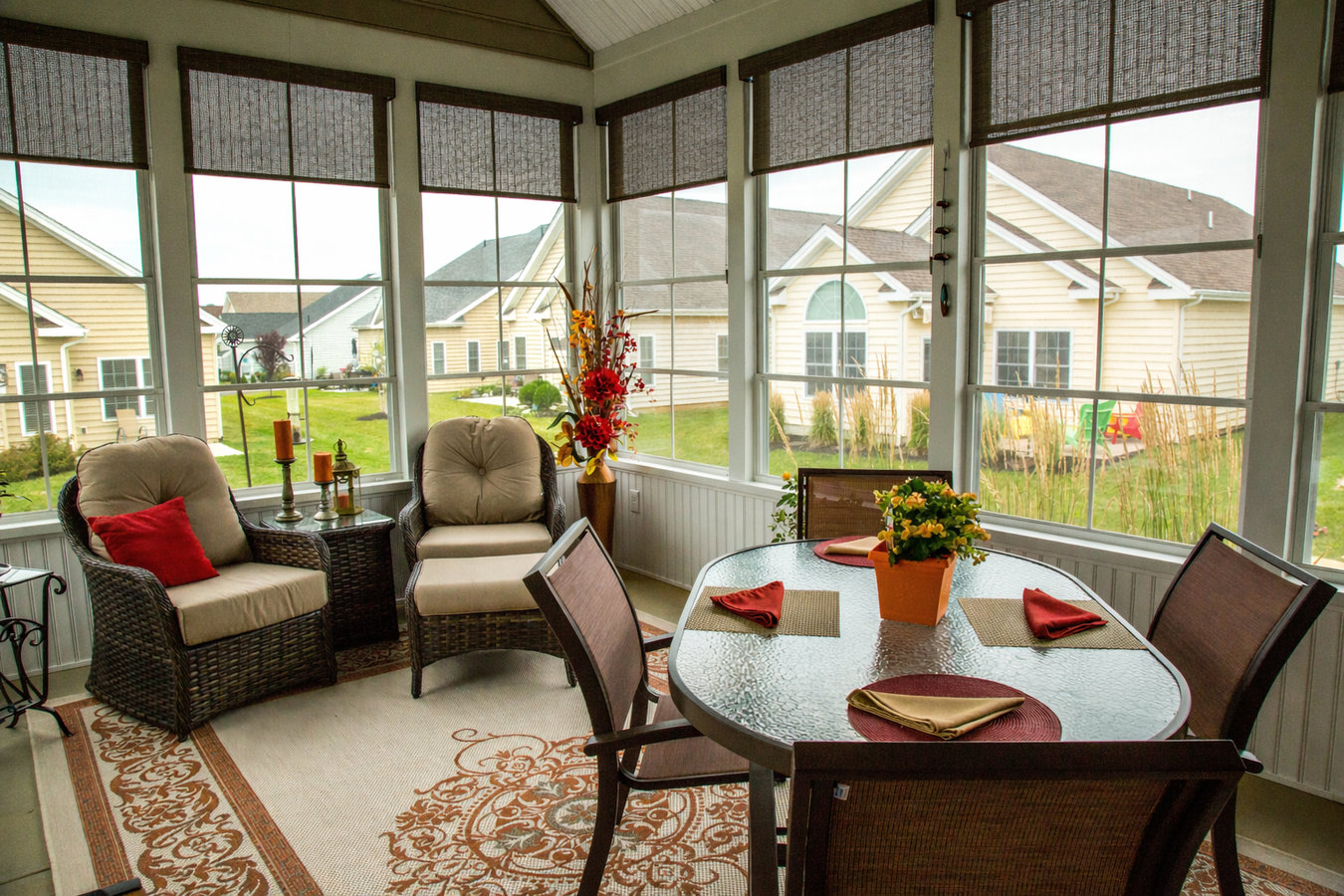
Your open patio is only usable a few months a year. We convert it into a cooled, weathertight room that handles Palm Coast summers, afternoon storms, and bug season without asking you to stay inside.
Enclosed patio rooms in Palm Coast turn an existing outdoor patio into a covered, walled room attached to your home - most projects take six to fourteen weeks from permit submission to final walkthrough, with the Flagler County permit review adding two to six weeks before construction begins.
Most homeowners in Palm Coast start this conversation when their screened porch or open lanai stops being usable - either from bug pressure, storm damage, or simply because the heat makes it a five-month room instead of a twelve-month one. An enclosed patio room solves all of that with a solid roof, weathertight walls, and a cooling connection. If you are also considering a more fully constructed addition, our page on solarium installation covers glass-roof designs that offer a different aesthetic for homeowners who want maximum natural light alongside full weather protection.
The sections below walk through what signs indicate you are ready for this addition, how the permitting and construction process works, and what separates a well-built Palm Coast room from one that leaks after the first heavy rain.
If your outdoor patio sits empty for six months because Palm Coast summers are too hot and humid, that is a clear sign an enclosed, cooled room would change how you live in your home. A patio that only works in winter is only doing half its job. An enclosed patio room with proper cooling gives you that space back for the whole year.
Palm Coast's proximity to the Intracoastal Waterway and its network of retention ponds means mosquitoes and no-see-ums are a genuine quality-of-life issue, especially at dawn and dusk. If you retreat indoors every time you try to enjoy your patio in the evening, a fully enclosed room with sealed windows and doors solves that problem completely - you get the outdoor feel without the bugs.
If you already have a screened porch or lanai and wind-driven rain soaks the furniture, or the screens are torn and letting insects in, you may be at the natural upgrade point. Many Palm Coast homeowners start with a basic screen enclosure and eventually decide they want something more solid. An enclosed patio room fills that gap - it handles Florida's afternoon thunderstorms without requiring you to move everything inside.
If you plan to sell your home in the next several years and want to add square footage that shows up on an appraisal, an enclosed patio room is one of the more practical ways to do it - provided it is built with permits. Unpermitted additions in Flagler County can complicate a sale or require disclosure. A properly permitted enclosed room adds documented, insurable living space to your home.
We build enclosed patio rooms across a range of configurations - from straightforward conversions of existing screened porches to fully built-out rooms with custom flooring, lighting, and dedicated cooling systems. For homeowners comparing enclosed patio rooms with more substantial additions, our page on patio cover installation covers a related option for homeowners who want overhead protection without full wall enclosure - a useful starting point if full enclosure feels like more than you need right now.
Every project starts with a site visit where we measure your existing patio, assess the slab or foundation, and look at drainage - Palm Coast's flat lots and canal-adjacent soil mean water management is a genuine design consideration, not an afterthought. We handle the full Flagler County permit process, source windows and wall panels that meet local wind-load requirements, and install a cooling system sized for the room's actual square footage and sun exposure.
Converts an existing screened lanai or porch into a fully enclosed, weathertight room - the most common starting point for Palm Coast homeowners ready to upgrade.
Builds walls, a roof system, and windows onto an existing concrete slab - a cost-effective approach when the slab is in good condition and drainage is already correct.
For homeowners who need a new slab or foundation before enclosure work begins - common on flat lots where drainage needs to be corrected before walls go up.
Takes the enclosed shell to a fully finished room with flooring, outlets, lighting, and interior walls that match the rest of the house - not just a functional enclosure.
Palm Coast sits in Flagler County, designated a high wind zone under Florida's statewide building code. Any enclosed patio room built here must be engineered to withstand sustained winds the kind of forces a serious storm can generate - and your contractor must be able to show documentation proving the design meets those standards. This is not just a legal requirement. It is the difference between a room that holds up in a storm and one that becomes a liability attached to your house. Palm Coast was also developed on flat, low-lying terrain originally carved out by a canal and drainage system, which means many lots have limited natural slope for water runoff. An enclosed patio room needs to be designed so rainwater drains away from the house rather than pooling against the slab. The U.S. Department of Energy has a helpful overview of energy-efficient glazing and mini-split cooling systems at energy.gov.
We serve homeowners across the region, including in St. Augustine where historic neighborhoods sometimes have their own overlay requirements on top of county permits, and in Ormond Beach where many homes have aging screen enclosures ready for a full enclosed patio room upgrade. Both areas share the same Florida wind-load requirements as Palm Coast, so the construction standards and materials are consistent.
Contact us by phone or through the form and we will respond within one business day. We will ask about your patio size, what you want to use the room for, and whether you have an HOA. This first conversation is free and comes with no obligation.
We come to your home to measure the space, assess the existing slab, and look at drainage and sun exposure. Within one to two weeks, you receive a written proposal with a clear price and scope - not a ballpark range, a real description of what gets built and what it costs.
Once you sign the contract, we submit the building permit to the Flagler County Building Division and help you prepare any materials your HOA requires. Permit review in Flagler County typically takes two to six weeks. We manage all of this and keep you updated throughout so you know when construction can start.
Work begins with any foundation or slab preparation, then framing, roof, walls, and windows, then the cooling unit and interior finish. County inspections happen at key stages - we schedule those and are present for them. After the final inspection passes, we walk through the finished room with you and answer any questions.
We come to your property, take measurements, and give you a detailed written quote - no obligation and no sales pressure.
(386) 529-0493Flagler County's Building Division processes permits for all Palm Coast projects, and a complete, accurate submission from day one is the difference between a two-week review and a two-month one. We handle every aspect of the permit application on your behalf - you do not need to track down forms, respond to county questions, or figure out what the inspector needs at each stage. That is our job.
Palm Coast was developed as a planned community, and a significant portion of its neighborhoods have HOA architectural review requirements for exterior additions. We ask about your HOA at the first meeting - not after permits are submitted - and help you prepare the drawings and documentation your board requires. Getting HOA approval before construction starts protects you from being asked to modify or remove a finished room.
Every enclosed patio room we build in Palm Coast is designed to meet Flagler County's wind-load requirements - the same standards that govern the rest of your home. That means the windows, the roof connections, and the framing are all specified to hold up in a serious storm, not just to look good on day one. You can verify Florida's building standards at floridabuilding.org.
Much of Palm Coast was built on flat terrain over a canal system, and many lots have very little natural slope for water runoff. We design the floor and foundation of every enclosed patio room so rainwater drains away from the house rather than pooling against the slab - a detail that contractors unfamiliar with this area sometimes overlook until there is a problem.
An enclosed patio room in Palm Coast is more involved than the same project in a less demanding climate - the wind requirements, drainage considerations, and HOA processes all add steps. We handle those steps so you are not navigating them alone, and we back every project with a written contract so both sides are clear on scope and price before a single board is cut.
A glass-roof enclosure that maximizes natural light - a step up from an enclosed patio room for homeowners who want full sun exposure with complete weather protection.
Learn MoreOverhead protection for an open patio without full wall enclosure - a practical starting point for homeowners not yet ready for a fully enclosed room.
Learn MoreFlagler County's permit process takes time - the sooner we submit your application, the sooner your new room is ready to use.