
Loading...
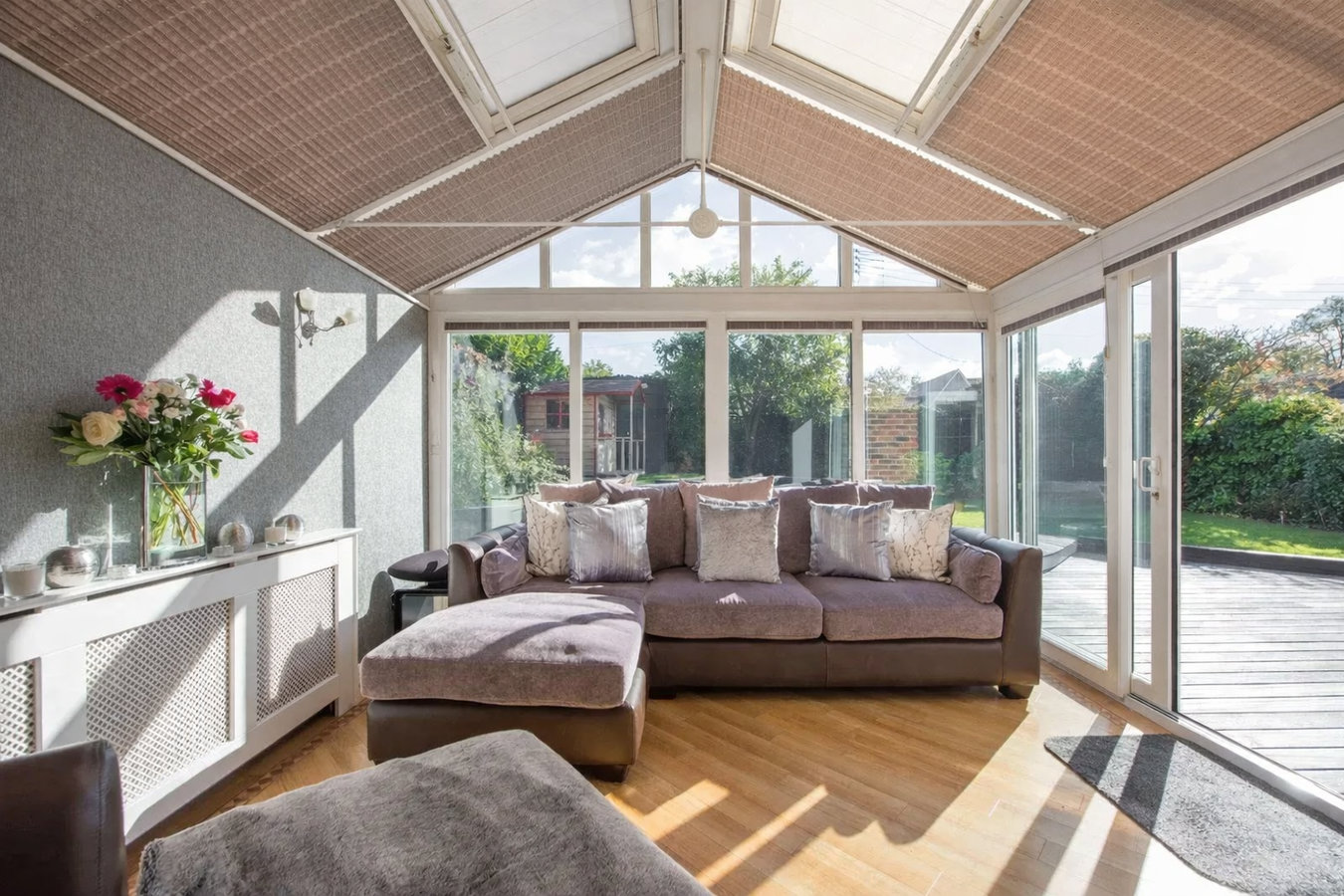
Your patio sits empty five months a year because of the heat. We enclose it with impact-rated windows and real climate control so you can actually use that space every day.
Patio-to-sunroom conversion in Palm Coast takes an existing concrete slab or screened porch and encloses it with walls, impact-rated windows, and a proper roof so it becomes a livable room - most jobs run six to ten weeks from contract signing through final inspection, including Flagler County permit review.
Many Palm Coast homeowners find themselves with a screened porch or open patio they barely use from May through September because the heat and humidity simply make it unbearable. A patio-to-sunroom conversion solves that by turning dead outdoor space into a real room with climate control. If you are starting to think about this, it helps to understand what a deck-to-sunroom conversion looks like as well - the two projects share a lot of the same process and can help you compare approaches.
The biggest differences between a good project and a frustrating one come down to the slab assessment, the window quality, and how the contractor handles permits. We will cover all three in plain terms below.
If you walk past your patio or screened enclosure for five months a year without using it because the heat and humidity are too much, that is the clearest sign a conversion makes sense. Palm Coast summers are long and intense, and a screened porch cannot compete with a 100-degree heat index. A properly air-conditioned sunroom turns that dead space into a room your family actually uses.
Torn screen panels, corroding aluminum frames, or brittle roof panels mean you are already facing a repair-or-replace decision. In Palm Coast's coastal environment, screen enclosures degrade faster than they would in a drier climate. Rather than paying to restore an enclosure that still leaves you exposed to heat and bugs, many homeowners find it makes more financial sense to convert fully at the same time.
If your family has outgrown your current floor plan and needs a home office, playroom, or just another place to sit, your patio may be the most affordable way to add that space. Converting an existing slab costs significantly less than building a full room addition from scratch because the foundation work is already done.
Small cracks in a patio slab are common in Palm Coast because of the sandy, shifting soil. But if you are seeing cracks that are widening, or sections that have dropped lower than others, the ground underneath is moving. Addressing this now - as part of a sunroom conversion - is far less expensive than fixing it after walls and windows are already in place.
Our patio-to-sunroom conversion work covers everything from basic three-season enclosures to fully insulated, climate-controlled four-season rooms. The three-season option is a good fit for homeowners who want to extend comfortable outdoor time into spring and fall without a major investment. For Palm Coast's climate, though, most homeowners find the four-season design pays off quickly because the summer months that were previously unusable become some of the most enjoyable rooms in the house. If you want to explore the full-enclosure approach in more depth, our page on enclosed patio rooms covers material choices and layout options in more detail.
Every conversion starts with a thorough slab inspection. If the slab needs leveling or partial repair, we handle that before framing begins - not after the walls are up. We manage the full permit process through Flagler County, source impact-rated windows that meet local wind-zone requirements, and coordinate any HVAC connections needed to tie the new room into your home's existing cooling system.
A good fit for homeowners who want comfortable outdoor-feel living in the cooler months with a lower upfront investment.
Fully insulated and connected to your home's air conditioning - the right choice for Palm Coast homeowners who want year-round use.
Ideal if you already have a screened enclosure and want to upgrade it to a fully weather-tight room with solid walls and windows.
For patios where the existing concrete has settled or cracked - we address the foundation first so the finished room is built on solid ground.
Palm Coast sits in Flagler County on Florida's northeast Atlantic coast - a wind-borne debris region where all new enclosures must use windows and doors rated to handle high-velocity winds. That is not just a code requirement. It means any sunroom we build here can take a named storm without failing, which matters when you live in an area that sees tropical systems regularly. Palm Coast was also developed on sandy, low-lying soil - many slabs poured during the city's big ITT-era growth in the 1970s and 1980s have settled unevenly by now. We check every slab before framing begins. The Florida Solar Energy Center notes that proper insulation and window selection in Florida's climate zone makes the difference between a room you use every month and one you abandon from May through September. You can learn more about the importance of insulation and building quality by visiting the Florida Solar Energy Center.
We serve homeowners throughout the Palm Coast area, including clients in Flagler Beach who deal with additional salt-air exposure on their screen enclosures, and in Bunnell where older homes often have patios that were built before Florida's current wind-resistance standards were in place. In both areas, the permit and inspection requirements are the same - and we handle all of it from our Palm Coast base.
We reply within one business day. The first conversation is a short call where we ask about your patio size, how you want to use the room, and whether you have a budget range in mind. No sales pressure - just a quick exchange so we can schedule a site visit that makes sense.
We come to your home, measure the patio, and walk the slab to check for cracks, settlement, and drainage. We look at the roofline and the wall where the sunroom will connect. You get a written proposal covering scope, materials, timeline, and total price - no surprises buried in fine print.
Once you approve the proposal and sign a contract, we submit the permit application to Flagler County on your behalf. Permit review typically takes two to six weeks here. We keep you updated so you know exactly where things stand - your start date is confirmed the day the permit is approved.
We prepare the slab, frame the walls, install impact-rated windows and the roof, then move to interior finishing - insulation, flooring, electrical, and HVAC connections. The county inspector visits at key stages. When the final inspection passes, we walk the finished room with you and hand over all permit and warranty documents.
Free on-site estimate. No obligation. We handle the permits.
(386) 529-0493We submit and track every permit through Flagler County Building Services - you never have to call the permit office yourself. A contractor who does not know this process well can cause weeks of delays with an incomplete application. We have done it enough times to know exactly what the county needs.
Palm Coast's sandy soil means patio slabs settle more than homeowners expect. We walk every slab during the estimate visit and tell you plainly what we find - including whether it needs repair and what that will cost. Building on a compromised slab is one of the most common causes of cracked walls and sticking doors a few years down the road.
Every window we install meets the wind-load rating required for Flagler County's wind-borne debris region. We can show you the product documentation and point you to the Florida Building Commission's approval listing for the windows we use. That rating protects your investment through hurricane season, not just on calm days.
Many Palm Coast neighborhoods - particularly the ITT-era planned communities - have architectural review boards whose requirements go beyond what the county building code covers. We ask about your HOA at the first visit and factor their standards into the design we propose, so the finished room clears both the county inspector and your association. Learn about HOA best practices at the National Association of the Remodeling Industry.
Every project we take on in Palm Coast runs through the same checklist: slab assessed, permits pulled, impact windows documented, HOA cleared if applicable. That consistency is why our clients refer us to their neighbors.
If you have a wood or composite deck instead of a concrete slab, a deck-to-sunroom conversion follows a similar process with structural reinforcement as the key first step.
Learn MoreExplore material options and layout configurations for fully enclosed patio rooms that suit Palm Coast's climate and HOA requirements.
Learn MorePermit timelines in Flagler County mean the sooner you start, the sooner you are in your new sunroom - contact us today to lock in your project date.